Nikon BioImaging Lab chooses Plus Ultra Leiden for new advanced imaging facility


Leiden, 22 June 2026 – Kadans Science Partner (“Kadans”) is proud to announce that Nikon BioImaging Lab (NBIL) will establish its new location in Plus Ultra Leiden, at Leiden Bio Science Park, from September 2026. NBIL is a Contract Research Organisation (CRO) specialised in assay development, advanced microscope-based imaging, and analysis and reporting services for the biotech, pharma, and wider research sectors.
NBIL will occupy half of the first floor at Plus Ultra Leiden, where it will continue to support researchers and companies to accelerate the pace and quality of scientific discovery with their high-end imaging expertise and data-driven solutions.
Advanced expertise and broad range of application
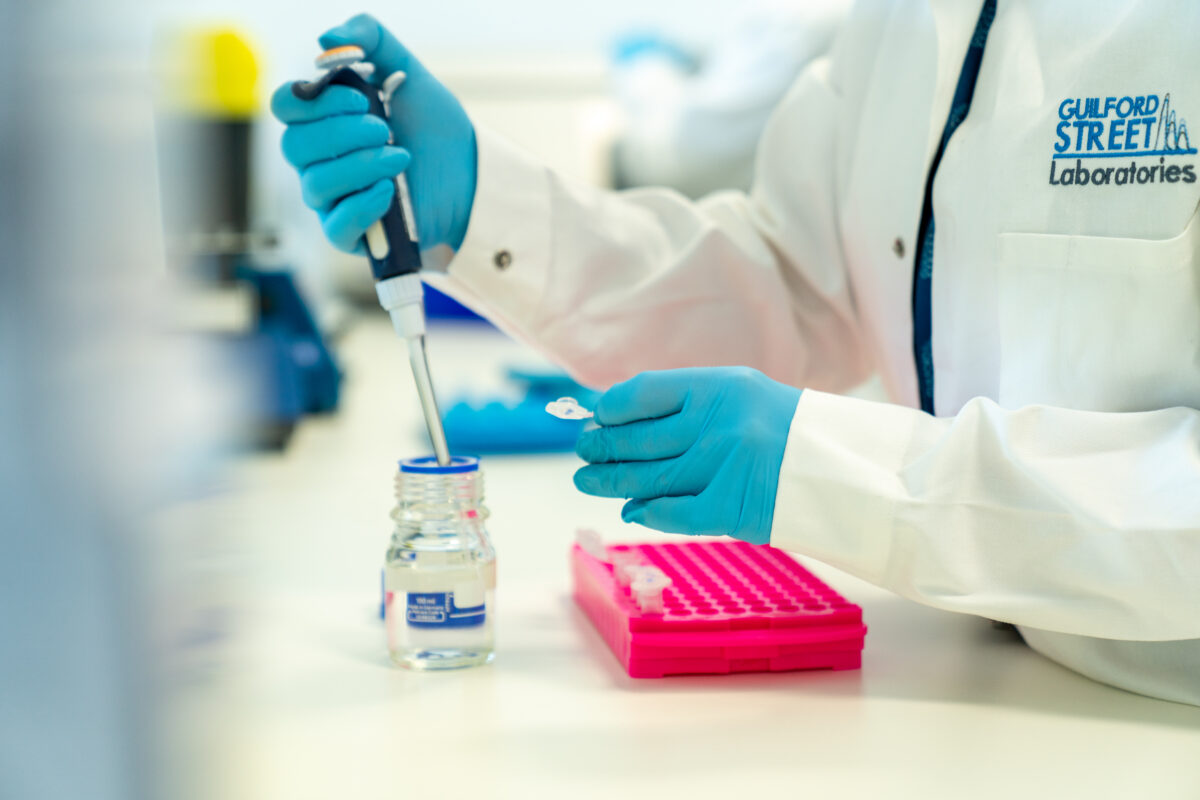
The laboratory provides imaging services for a broad range of applications; from 2D and 3D imaging to live-cell and organ-on-chip applications. NBIL’s capabilities include time-lapse imaging of dynamic cellular processes and high-content image acquisition. In addition to this, Nikon’s AI-powered analysis software enables automated, standardised, and optimised workflows – resulting in highly refined and reproducible datasets.
Alongside analysis and imaging, NBIL offers expertise in experimental design, assay development, and scientific consultancy. The multidisciplinary team of biology and microscopy imaging specialists supports their clients throughout the entire research process, allowing clients to accelerate their researcher timelines and achieve breakthrough discoveries with reliable, expert-validated imaging results.
“Nikon are very excited to open our Nikon BioImaging Lab site at Plus Ultra Leiden. The new site offers further collaboration within the scientific community, and will enable us to enhance the quality of scientific discovery we can provide to the researchers we support,” says NBIL Manager, Ziryan Othman. “We hope this new site will strengthen our collaboration with Kadans, and further enhances the research capabilities we offer to drug discovery and biotech companies throughout Europe.”
“We are extremely pleased to welcome Nikon BioImaging Lab to Plus Ultra Leiden. Their expertise is a valuable addition to the innovation ecosystem that we’re supporting as Kadans at Leiden Bio Science Park,” says Rob van Overbeek, Commercial Development Manager at Kadans Science Partner. “NBIL brings not only cutting-edge technology and scientific knowledge, but also strong opportunities for collaboration with the community, both across the science park as well on a wider European scale. Their arrival further strengthens Plus Ultra Leiden as a place where organisations can connect, innovate, and accelerate their breakthroughs.”
Plus Ultra Leiden
The addition of Nikon Bioimaging Lab reflects the continued growth of Plus Ultra Leiden as a destination for organisations focused on scientific progress and innovation. Plus Ultra Leiden is developed as a leading environment for life sciences innovation and collaboration. Located within Leiden Bio Science Park, the building combines approximately 16,000 sqm of bespoke laboratory and office space with shared facilities, and a light-filled atrium. This open design encourages interaction between organisations and supports knowledge exchange within the community.
As part of Leiden Bio Science Park, the largest life sciences and health cluster in the Netherlands, Plus Ultra Leiden sits at the heart of a thriving international ecosystem. The cluster brings start-ups, scale-ups, multinational companies, and academic institutions together in one place. Through its central location in this collaborative environment and the specialised facilities provided by Kadans, Plus Ultra Leiden supports companies and researchers working to shape the future of health and technology.
Plus Ultra Leiden is part of Kadans’ international network, which is currently already active in 30+ science clusters throughout six European countries. This network of locally and globally connected clusters strengthens access to valuable resources, facilitates the exchange of knowledge, and creates opportunities for meaningful collaboration.