ESMO 2026: The Science Is Advancing. Are We Doing Enough to Translate It into Better Patient Outcomes?
Written by Qaisar Rafiq – Senior Director European Business Development
Reflections from Madrid on personalised cancer vaccines, AI in clinical practice and the challenges of turning scientific breakthroughs into meaningful progress for patients.
I returned from ESMO 2026 in Madrid feeling encouraged by the scientific progress being made in oncology, but equally conscious of the challenges that remain in translating these advances into treatments that reach patients.
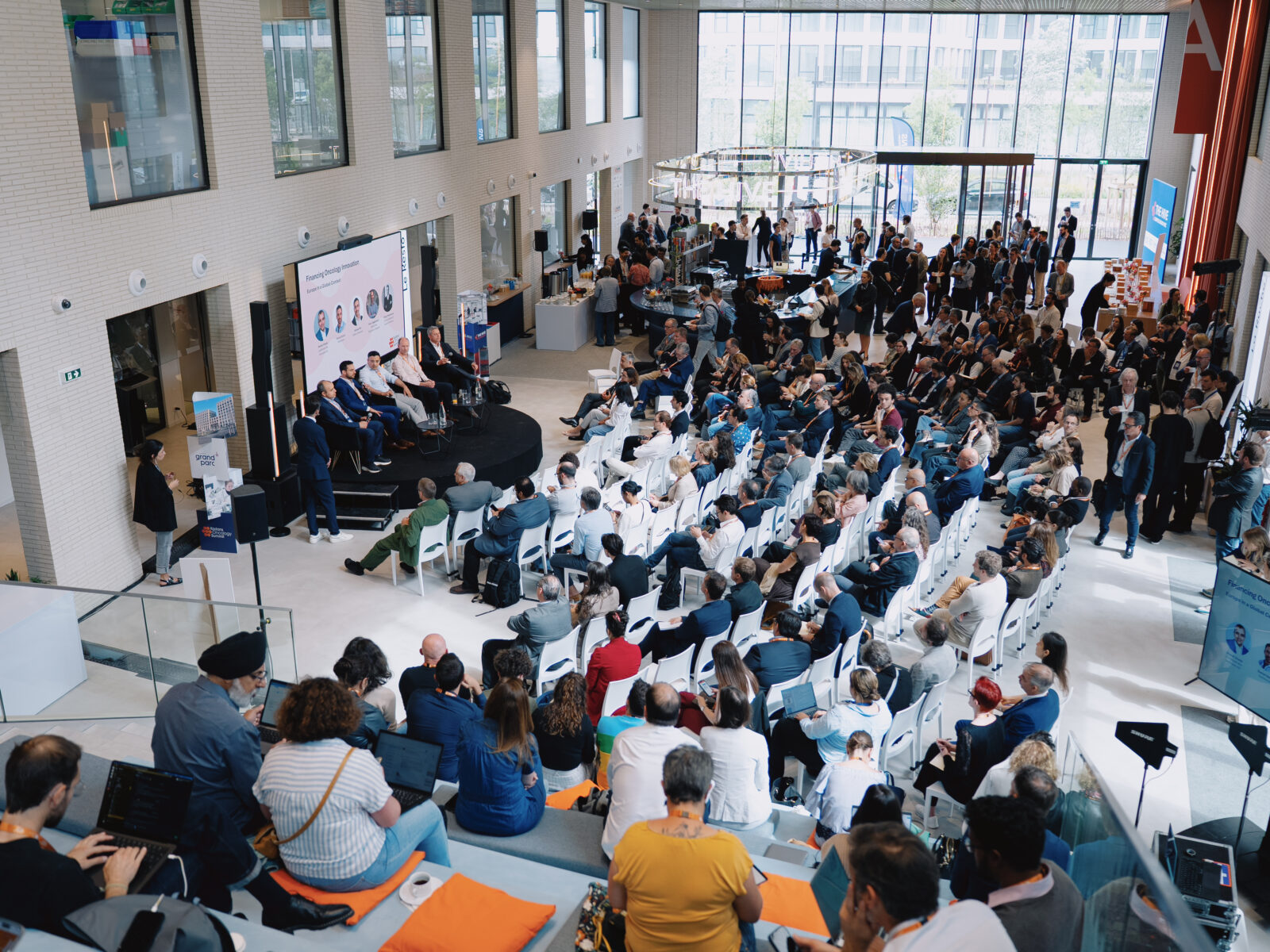
With close to 40,000 participants and more than 4,400 abstracts, the scale of the congress was remarkable. But beyond the numbers, what struck me was how much the conversation has evolved.
We are no longer simply discussing how to develop better cancer treatments. Increasingly, the focus is on how we can detect cancer earlier, understand its biology more precisely, predict treatment response and ultimately make better decisions for individual patients.
Having spent much of my career working across clinical research and drug development, I find this particularly exciting.
Several discussions stood out during my time in Madrid.
1. Personalised cancer vaccines: A significant step forward
One of the most talked-about presentations at ESMO was the Phase III INTerpath-001 study from Moderna and Merck Group, evaluating the individualised mRNA-based neoantigen therapy intismeran autogene in combination with pembrolizumab in patients with resected high-risk melanoma.
The results were impressive.
At 24 months, recurrence-free survival was 82.2% with the combination compared with 70% for pembrolizumab alone, representing a 42% relative reduction in the hazard of recurrence or death. Distant metastasis-free survival also improved significantly.
For me, what makes this particularly exciting is the science behind it.
We are talking about developing a treatment based on the unique mutations found within an individual patient’s tumour, with the aim of stimulating their immune system to recognise and attack cancer cells.
The concept of personalised cancer vaccines has been discussed for many years. Seeing encouraging results from a large, randomised Phase III trial is an important milestone.
Of course, questions remain around long-term survival, manufacturing complexity, cost and accessibility. The treatment remains investigational.
But it does make you wonder how far we could take personalised medicine over the next decade.
And perhaps more importantly, how do we ensure that such sophisticated treatments can eventually be delivered at scale, rather than remaining accessible to a relatively small number of patients?
2. AI in oncology: Moving beyond the hype
I attended several excellent sessions exploring the integration of artificial intelligence into cancer research and clinical practice.
What interested me most was not necessarily the increasingly sophisticated AI models being developed, but how leading cancer centres are beginning to use these technologies to address very practical challenges.
At Memorial Sloan Kettering Cancer Center, Francisco Sanchez Vega discussed the integration of genomic, pathology and clinical information to improve cancer classification and support precision oncology.
Danielle Bitterman explored how large language models and agentic AI systems could reduce the administrative burden on clinical teams, including extracting adverse-event information from patient records.
One study presented showed a 40% improvement in workflow efficiency when AI was combined with appropriate human oversight.
That is significant.
Having worked in clinical research, I know how much time can be consumed by documentation, data reconciliation, adverse-event reporting and navigating increasingly complex clinical information.
If AI can help reduce that burden, allowing clinicians and researchers to spend more time on activities that genuinely require their expertise, that alone could represent meaningful progress.
But there was an equally important message throughout these sessions.
An AI model that performs exceptionally well in a controlled study does not automatically become a useful or safe tool in clinical practice.
Data quality, interoperability, clinical validation, patient privacy and human oversight all matter.
I was particularly struck by the discussion around clinicians already using generative AI informally, often ahead of institutional policies and governance frameworks.
The technology is moving quickly. The question is whether our healthcare systems are keeping pace.
3. Earlier detection and smarter monitoring could change the patient journey
Another highlight was hearing about advances in circulating tumour DNA (ctDNA), particularly Dan Landau’s work on increasingly sensitive molecular monitoring.
The ability to detect molecular evidence of disease recurrence well before it becomes visible on conventional imaging has enormous potential.
Similarly, Rebecca Fitzgerald’s work on minimally invasive screening for Barrett’s oesophagus demonstrates how earlier detection could change the trajectory of disease, potentially allowing intervention before patients develop advanced cancer.
But detection is only one part of the equation.
We also need to understand what to do with that information, when to intervene and whether acting earlier genuinely improves outcomes.
This theme continued into the discussions around digital health and remote patient monitoring.
I was particularly encouraged by the work presented by Inez Vaz-Luis from Gustave Roussy on integrating electronic patient-reported outcomes into routine oncology care across France and Belgium.
What stood out was that the success of these programmes was not simply about collecting patient information through digital platforms.
It was about ensuring that clinical teams could respond appropriately, with trained nurse navigators, clear escalation pathways and reimbursement models that supported implementation.
There is an important lesson here.
Technology does not improve patient outcomes simply because it exists. Its value comes from how effectively we integrate it into patient care.

4. Understanding cancer biology remains fundamental
Amid all the excitement around AI, I found the discussions on tumour biology and previously considered ‘undruggable’ targets equally fascinating.
Advances in KRAS inhibition, protein degradation, synthetic lethality and immunotherapy are challenging long-held assumptions about which cancer targets can be treated.
I particularly liked the suggestion that we should stop referring to certain targets as ‘undruggable’ and instead consider them ‘unsolved’.
It is a subtle but important change in mindset.
What was considered impossible a decade ago is increasingly becoming achievable through advances in chemistry, structural biology and our understanding of tumour biology.
Professor Tony Ng’s presentation on digital biological twins, patient-derived organoids and multimodal data was another excellent example of the convergence between biological science and computational technology.
The potential to combine molecular information, imaging, immune profiling and experimental models to better predict treatment response is fascinating.
But one message stayed with me throughout these discussions.
AI and computational technologies are not substitutes for understanding human biology. They are tools that can help us understand it better.
And ultimately, it is that understanding which will determine whether we develop treatments that work for the patients who need them.
5. The biggest challenge may still be translating innovation into clinical practice
This brings me to perhaps my most important reflection from ESMO.
We have an extraordinary amount of scientific innovation taking place across oncology.
We are developing increasingly personalised treatments, improving our ability to detect and monitor disease, and creating technologies that could fundamentally change how clinical research and healthcare are delivered.
Yet the journey from scientific discovery to a treatment reaching patients remains incredibly complex.
Drug development is expensive, clinical trials are becoming increasingly sophisticated, patient recruitment remains challenging, and regulatory and reimbursement pathways do not always keep pace with innovation.
Even when the science is compelling, companies still need to make difficult decisions about where to invest, how to prioritise development programmes and how to reach meaningful clinical milestones.
I have long maintained that developing great science and successfully developing a medicine are two very different challenges.
Both require expertise, but not necessarily the same expertise.
And this is where I believe the wider innovation ecosystem has an increasingly important role to play.
We need stronger connections between academic researchers, clinicians, biotechnology companies, pharmaceutical organisations, technology providers, investors and policymakers.
We need access to the right infrastructure, talent, capital and specialist expertise at the right stages of development.
In my current role at Kadans Science Partner, I have the opportunity to work with innovators across Europe’s life sciences and technology clusters, and I see first-hand how important these connections can be.
Not every challenge can be solved by providing more funding or building more laboratory space.
Sometimes the difference comes from connecting the right people, bringing complementary expertise together or helping an innovative company navigate the next critical stage of its development.
Final reflections
I left Madrid optimistic.
Not because every scientific advance presented at ESMO – European Society for Medical Oncology will translate into an approved treatment, or because AI is about to solve the complexities of cancer care.
But because we are seeing meaningful progress across several fronts simultaneously.
The advances in personalised cancer vaccines, molecular monitoring, targeted therapies and AI-enabled clinical practice demonstrate just how far oncology has progressed.
The opportunity now is to bring these developments together in ways that improve the experience and outcomes of patients.
And perhaps that requires us to think differently about how we support innovation.
Less focus on breakthroughs in isolation, and more attention to what is required to translate them into clinical practice.
Because ultimately, the true measure of innovation in oncology is not how sophisticated the science becomes, but how many patients benefit from it.
As we look towards the next decade of oncology innovation, are we doing enough to connect the science, clinical expertise, technology and investment needed to turn these breakthroughs into better patient outcomes?
Be inspired by innovation
From groundbreaking research to tenant milestones — stay updated on what’s happening across our European science clusters.